Monday, March 28, 2016

Best Apps for Health & Wellness


There are 100,000 and counting apps for health and fitness on the market today. That's pretty exciting, but very overwhelming at the same time. It's like Netflix, you have so many movie/TV show options at your finger tips, but you end up spending 30 minutes just looking through all the different categories that you just end up giving up on trying to watch anything at all. The endless amount of apps left me searching for hours trying to research which ones were actually good that by the time I downloaded a few, I was over the whole idea. Which is unfortunate, because there is a lot of really good stuff out there.

Jenn's Favorite (FREE... ish) Apps for Health & Wellness


Calm

Calm is an app to calm yo' self. There are 10 minute guided meditations with your choice of background noise (lake with birdies chirping, beach waves crashing, rain drops, etc). If you don't want the guided meditation part, then you can just listen to the waves and chillax. If you are like me and want someone to talk to you, there is a "body scan" option for progressive relaxation (squeeze your muscle, then let it go), and a "calm" option. There are a zillion others, but to get them you must subscribe. Try out the free ones and if you really enjoy it, you can subscribe for $3.33/month.


Swork It 

Swork it's motto is "No gym, no excuses". There are four workout options- Strength, Cardio, Yoga & Stretching. Each option has a type of workout you can select (full body, upper body, lower body, core, etc.) and the amount of time that you have (five, ten, fifteen minutes). Don't have the time to get in a quick stretch, or don't know what to do? No more excuses. You can even have it send you text alerts to stop and stretch. If you sit at a computer desk all day, I recommend to stop and stretch/move your shoulders, neck, back, hips, and wrists for AT LEAST 2 minutes every hour.


Strava 

Strava is an app for tracking athletic performance using your GPS (phone, garmin, fitbit, etc.) It's like facebook, but for runners, cyclists, snowboarders, walkers, & whatever else your heart desires. You can give "kudos" to a friend for their run, you are able to score virtual medals if you finish a challenge (who doesn't love a good pat on the back), and you also get trophies for PRing different routes. I like how I am able to track my performance overtime, and it helps to be motivated by my followers giving me a thumbs up. 


Daily Water


Who else forgets to drink water until all of a sudden its noon and all you've had is two massive cups of coffee? Guilty. Is it sad that there is an app that will text you to remind you to drink water? Maybe. But whatever works to stay hydrated. You can customize how often you want to be reminded, and also keep track of how much water you are drinking.

Sunday, February 21, 2016

Rule #76: No Excuses, Play Like a Champion.

"'I don't have time' is the grown up version of 'the dog ate my homework'".

Life is stressful. Student loans, car payments, kids to feed, 50+ hours work, long commutes, boss barking at you, deadlines to meet, etc. Plus, we need to fit exercise into our days in between all the chaos because it's supposed to be good for us right? I've heard every excuse in the book for why one isn't exercise. In fact, I've used every excuse there is to get out of exercising.

Here are some of the common excuses that I hear every day, (and some of which I have used myself) with a rebuttal to challenge these excuses.

Excuse #1: I don't know what to do.
Work out trends are like diet trends, there are so many different types and it can be so overwhelming. How can all these experts have completely different opinions on how to exercise? I get this question from my patients everyday. And as a physical therapist, it is my job to prescribe exercise. Sure there are some extremely general guidelines out there. The Department of Health and Human Services recommends that healthy adults should be getting 150 minutes a week of moderate aerobic activity or 75 minutes a week of vigorous aerobic activity, as well as performing strength training activities twice a week. Moderate aerobic exercise would include activities like brisk walking and swimming, whereas vigorous aerobic exercise includes activities like running and dancing. Use of weight machines, rock climbing, and body resistance type exercises would be considered strength training. That's less than 25 minutes of moderate exercise per day, and 10 minutes of vigorous. Obviously this is very very VERY vague guidelines, but it depends on an individual's goals with their exercise that determines the type/amount/frequency.

Is your goal to:
  • lose weight?
  • gain muscle mass?
  • decrease stress?
  • train for an event?
  • prevent illness/injury?
  • gain flexibility?

Ask yourself, why? What is your goal with exercise? If you don't have one, start brainstorming. It is extremely difficult to get very far without a destination in mind.

Excuse #2: I can't afford a gym membership.
Yes, many gym memberships are super, duper expensive. Especially with the influx of boutique-y type gyms, memberships can easily hit over $100/month with individual 1-hour classes at $15. But here are a few options for those on a budget.

  • ClassPass. If you enjoy variety, and I mean everything under the sun, ClassPass may be a good opinion for you. Personal training, cycling, yoga, Pilates, you name it, ClassPass probably has it. It is a monthly membership fee of anywhere from $79-$129 (depending on where you live) which is still a good chunk of change, but if you are going to 3-4 classes per week, you are paying less than $10 per class. You sign up for a class before you get there, so you don't have to worry about there being a spot for you. A con (or a pro based on how you think of it) is that there is a fee if you sign up for a class but don't show up, or don't cancel ahead of time, which could be a con for those who have inconsistent schedules but a pro for those who need the extra motivation to go. Another con (kinda) is that you are only able to go to one gym three times within one month. So if you really like the Monday night Vinyasa Yoga at Yo-Yo-Yogie, you won't be able to go one week out of the month. I do this three is kind of silly, it makes it a little difficult to get into a routine. But it does make it so that you try out various places, different teaching/coaching styles, and new experiences.
  • Meet up. The website meetup.com has a lot of different exercise classes, many for free or donation based. You simply go to the website, click "Find" a group, put in your zip code, and there is a search bar if you want to look up "Tai Chai" or whatever it is your heart desires, or there is a "fitness" and "health/wellbeing" page to help if you really don't have any specific interests.
  • Various Apps/You Tube Videos. There are a bunch of FREE You Tube videos that have guided exercise routines whether is a quick interval training session or meditation. You only need yourself and probably some space in order to get a workout in. iTunes has an app called "Daily Workouts-FREE" that has videos as well as a listed exercise progression.


Excuse #3: I don't have the time.
I probably hear this one the most. Guess what, no one has the time. You have to make the time. This is your health that we are talking about, how do you not have time for that?

Excuse #4: I've never been an exerciser.
It's never to late to start something new! Maybe brainstorm why you have never been an exerciser. Is it because you never had an exercise goal to strive for, you've tried various types of exercise, but never for long enough to actually give it a shot? Have you been putting everybody else's health/wellbeing before yourself? Time for some self exploring. Everyone had to start somewhere. I was telling a patient the other day that my mom literally forces me to play sports as a kid. My first soccer game at 4 years old, she was standing by my side the entire time or else I refused to get on the field. My first golf tournament at 6 years old,  I didn't want to play. My mom basically dragged me onto the course while I had tears in my eyes. Some make think, "wow that's torture!" or "I would never force my kids", while my mom did and I'm so glad she did. I was a super shy kid, and not very self motivated. So she pushed me quite a bit. But that's how it is with all new things, including exercising, it's scary. I've wanted to quit different exercises classes various times because I didn't feel like I fit in. Me talking to myself in my head: "I'm the only one not wearing Lululemon in the yoga class therefore I must stick out like a sore thumb", or "um.. this is embarrassing, I didn't know you needed socks for Barre, now the teacher just came up to me and told me that I need to leave and go borrow some from the front desk because it's a health hazard without any", or "I cannot keep up with everyone else in this Pilates class, how the heck are they doing the exercises so fast with that much weight!?". My point is, everything is awkward at first, don't give up and just say that your not an exerciser. Do me a favor, try a class/exercise at least 4 times before making an opinion about it. Your future self will thank you for going out of your comfort zone and trying again.

Excuse #5: I already work out because my job involves labor, or I'm on my feet at work, etc.
I hear this one a lot too. When I ask, "do you have a current exercise regime?" and sometimes I'll get back "well no, but I'm exercising all day long at my work when I get up and down to the bathroom (I've literally heard this one), or "Yeah I'm lifting/stocking shelves at Trader Joe's". That's great that your job doesn't make you sit behind a desk all day like a lot of America, but exercise doesn't just have physical benefits, but psychological benefits as well. You rushing to and fro in the chaos of work, or walking 40 times to the fax machine down the hallway does not give you the same benefits as deep breathing in yoga and it doesn't increase your heart rate like cardio activities do. I'm going to emphasis this again, exercise is not just for our physical body, but we are understanding more than ever the benefits of exercise on the mind. And in my opinion, the mental benefits of exercise far outweigh the physical benefits.

Excuse #6: I just really don't enjoy exercising.
Is it that you don't enjoy it? Or is is that you just don't have the motivation? To be honest, this excuse sometimes I can understand. I can understand not wanting to get out of bed an hour earlier to go to that cycle class when my cozied up next to significant other in bed, and I'm warm under this comforter and it's freezing the second my skin touches the air.

Excuse #7: It hurts.
There are lots of reasons why exercise can hurt. Maybe you are performing the activities incorrectly or inefficiently, causing a repetitive type injury. Maybe you have an acute injury that is causing a motion to be painful. Your brain may be so oversensitive to movement that it is sending pain signals to the body, thus causing pain. Pervious injuries, stress, and fatigue are just a few reasons why the brain can be hypersensitive to movements such as exercise. GUYS, PLEASE GO SEE A PHYSICAL THERAPIST IF EXERCISE HURTS!!

Excuse #8: I just eat really healthy.
High-five. Now if you have the drive to eat really healthy, just imagine what would happen if you stopped making excuses to exercise.

So I already mentioned that I myself can be an excuse queen. In fact, it took me two years to finally get back into a solid weekly routine that includes strength training, cardio, flexibility and mindfulness type exercises. After moving to Portland, I pretty much had to start all over again. I had to find the motivation in the miserably cold weather to get up and outside. I was already fatigued from probably lack of vitamin D (no sun for 24 days in a row is rough people, especially for a California beach girl), and I didn't really know my way around town or even how to drive in the dark/cold in an unfamiliar place (see the excuse list just keep growing??) It wasn't until none other than my Uber driver on New Years Eve who really got me thinking about exercise in a different way. When he heard that my boyfriend and I had recently moved from California he said, "the only way you are going to survive this place is if you exercise every day. It is the only way that you will be able to get your body warm the next couple of months, and it's key for getting through the Winter into the Spring". I'm not sure why this reason out of every known benefit of exercise is what finally kicked me in my rear end, but it worked. I was back into a routine within the month and have been keeping with it. It was extremely rough the first few weeks. I was so tired at the end of everyday. I had to literally plan my days around when I could exercise, which was frustrating and annoying. I even had to skip out on plans with some friends, but I set a goal and it was important that I stick to it this time. Even though it's only been about 7 weeks with this new routine, I have more energy at the end of the day than I ever have before. I don't find myself feeling foggy during the day, and I don't just pick up a less health food option on my way home to save time when I have stuff to cook at home. I've had a couple of mornings where I have slept in, but I had the determination to make it up sometime during the week.

Some tips to getting back into the routine.


  1. Pick a date. Mark it on the calendar, tell your friends.
  2. Find a group. When you know others will call you out for not showing up, it's all the bit more motivating
  3. Give yourself external rewards (only at first). The goal is that exercise itself will be the reward to exercising. But when you are first get back into it, exercise my not be all that motivating.
  4. Make a realistic goal. The worst is when we set our expectations too high and we fail. Be nice to yourself and make a short term goal, something like "I will run for so many minutes per week", or "I will take yoga 2 times this week". Write this goal down, and put it somewhere that you can see it, so when you are feeling weak you can have the reminder. My gym actually has an app that you can write a goal and it tracks your progress for you. When you reach your goal it gives you a little congrats email, which is silly how satisfying it is. 
  5. Get your support system involved. Get them on your team and hey! maybe they will even want to join you. When you are feeling weak, call one of your friends who can help motivate you. Let them know how important this is to you, and that their support is very important to you. Start up #deadlifts4datenight or #crunchbeforebrunch... yeah??? I like the sound of those.
  6. Make it excuse-proof. Don't join a gym that is clear across town that has odd hours, or times that don't really work with your schedule. Find something close to work, or your house. Better yet, find something that you literally have to drive by on your commute. Preferably this gym will have showers so you can go before work since we all know that we are dead tired at the end of a work day. Keep an extra pair of sneakers and clothes in your car or at work. Sleep in your running pants and shirt with your shoes and socks right next to your bed- I do this all the time, one less step/excuse to have in the morning.
  7. Keep it low and take it slow. Please don't jump off the couch straight into playing tennis four times a week. Too much, too fast, too soon can result in injury and we are right back to where we started from.


A cheviot to my exercise soap box- more doesn't always mean better. An extreme example would be this: Many people have seen the TV show The Biggest Loser where a dozen or so overweight/obese contestants compete to lose the highest percentage of weight in order to win a million dollars. At "the ranch" where the show takes place, they are exercising most hours of the day, and have a professional chef cooking for them. Most of them shed 100's of lbs., but sadly many do not keep the weight off once they get back home. Working out all day, having someone cook for you, and no external stress to worry about except for shedding the weight isn't "real life". So the contestants go back to their daily routines and find it is difficult to keep up exercising and eating the way they were before.

Keep exercise at a level that can be maintained and even enjoyable. This isn't temporary, it's a lifestyle.

Monday, February 8, 2016

Let's Talk About Sex, Baby!

Okay guys and gals, it's time that we talk. It's Valentine's Day on Sunday, and I thought it was a good time to discuss everyone's favorite topic, sex. Sex is great! It's a way to show love to your partner, a way to express yourself, and a way to make yourself and partner feel good. But what about those who can't stand sex? Not because they necessarily don't want to have sex, but because it is actually painful. Unfortunately, for those suffering in the bedroom, sex is often a hush-hush topic. We sometimes talk about it with our friends, if you are lucky maybe with your significant other. But it's really hard to admit that you aren't enjoying sex when you hear your friends bragging about how they just had the best orgasm ever. You start to think, what's wrong with me? Not to mention the pressure you feel to make your partner happy, so you have sex anyway, even though you can't stop thinking about when this pain will just be over, just finish already!

For those ladies suffering, you aren't alone.


It has been found that over one-third of females have pain during intercourse, which is probably under reported. It doesn't matter the age, whether you are 18-years-old in your first sexual relationship, 30 years old in a happy, healthy marriage, or post-menopausal, all women can be affected. The North American Menopause Society (NAMES) found between 17-45% of post-menopausal women say that they find sex to be painful. According to the same survey, only 25% of women seek treatment. This may be in part due to the fact that women aren't being asked by their healthcare providers if they are having trouble in the sack. According to the International Menopause Society, 70% of women reported that  their healthcare provider did not ask about sexual health.

Sex. Should. Not. Be. Painful.

Ladies, have you ever checked out your vagina? Chances are you haven't. Or even if you have, you have no idea what's what. Here is a QUICK anatomy lesson of the female pelvic floor:


Yeah, there is a lot going on down there. (and yes men, you also have a pelvic floor too)... Basically, the pelvic floor is like a muscular sling, a trampoline of muscles that run from the tailbone, to the pubic bone, and between the sits bones. It has "passageways" through it, three in women (vagina, urethra and anus) and two in men (anus and urethra).

It is made up three layers of muscles that help with:
1) sphincter control (so we don't poo/pee ourselves, and hold in gas)
2) support for the pelvic organs such as the bladder, urethra, and rectum
3) sexual function including ejaculation for men and arousal in women
4) It works with the abdominals and back muscles for stabilization of the spine.

Okay, I told you it was going to be quick. So, I'm going to continue discussing the third function listed above, specifically different pelvic pain disorders that can cause painful intercourse, aka dyspareunia.

Types of pelvic pain:

Vaginismus: I'm sure this is a term that you have never heard of before, however approximately 17% of females worldwide suffer from vaginismus. Generally this is when there is pain during penetration, whether it be during intercourse, with tampon use, or during a pelvic exam. This occurs when the vaginal muscles involuntarily  spasm, making it virtually impossible to penetrate. In other cases, penetration may occur, but is followed by periods of involuntary muscular tightness. It may feel like a burning and/or stinging with tightness on entry. Often times this leads to avoidance of sexual intercourse, because it hurts! The cause is unknown, however it often can follow childbirth, yeast/urinary infections, STDs, hysterectomy, cancer, surgery, rape, and menopause. Symptoms can come on at any point in a women's life, even after years of non-painful, enjoyable sex. If left untreated, symptoms can get worse since the experiences of sexual pain can increase in intensity and duration due to the anticipation that pain will occur. If we fear that we will feel pain, then we will involuntarily muscle guard due to fear/anxiety reality to pain, which perpetuate the cycle.
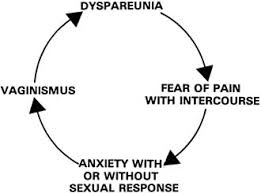

Image result for vaginismus


The good news is, you don't have to live with this and there is hope. Physical therapists can teach relaxation exercises to decrease muscular guarding, desensitization techniques to decrease reflexive pelvic floor activation, help to manually relax and stretch tight pelvic floor muscles, provide dilators to increase vaginal canal size, and treat additional musculoskeletal issues related to the core, pelvis, and back. For more information, check out: https://www.vaginismus.com/

Example of different dilator sizes.


Vestibulodynia: aka Vulvar Vestibulitis Syndrome, but the term 'itis' infers that there is an inflammatory process occuring, however with vestibulodynia, there is no active inflammation. Symptoms for each women can be look very different, however it is overall a hypersensitivity to light touch at the vestibule, or opening of the vagina. Some women explain the intense symptoms as being felt like "acid being poured on my skin" and "constant stabbing, knife-like pain".  The picture below outlines with red circles the areas most commonly affected. In the clinic, we perform what is called the Q-tip test in which we gently place a Q-tip at these areas to assess for hypersensitivity, or what we would call elevated pain levels.


Why hypersensitivity occurs isn't entirely known, but it may be due to an overgrowth of the nerves to this area. There may or may not be redness associated with vestibulodynia, however itching is not usually a symptom. This can also make tampon use, intercourse, or vaginal examination painful due to the hypersensitivity to touch. Lifestyle habits such as prolonged sitting and wearing of fitted pants can also increase the symptoms. Physical therapists can help to educate patients on safe hygiene for the vulva.  For more information, check out: http://www.vulvalpainsociety.org/vps/index.php/vulval-conditions/vestibulodynia


Vulvodynia: another type of vulvar pain similar to vestibulodynia, however symptoms are considered more general, and not specific to the vestibule. Symptoms are often constant, with intermittent periods of symptom relief. Pain may be found at the inner thigh, clitoris, labia, and/or vestibule. The picture below depicts there most commonly affected areas with the red circles.


Interstitial Cystitis: (IC) aka Painful Bladder Syndrome. This diagnosis includes pelvic pain, pressure and/or discomfort with urination or directly after urination, as well as urinary urgency (strong urge to go), and frequency (needing to go often). Ten percent of women with IC also suffer from ulcers, and a hardened bladder. This condition is very difficult to diagnosis, and is often misdiagnosed as urinary tract infections, treated with ongoing antibiotics. Usually it is diagnosed after additional treatments are utilized without success. Currently, there isn't really a gold standard test for IC since the current tests have low sensitivities. Obviously, this can lead to chronic, persistent pain since these individuals are often bounced around from one healthcare provider to another. For more information, check out : http://www.ichelp.org/


Additional causes of pelvic pain can also include endometriosis, pelvic organ prolapse (POP), low estrogen, scarring from surgeries/child birth, radiation treatments, and persistent muscular tension.


PHYSICAL THERAPY is a treatment option! Yes, physical therapists can help you improve your sex life.

This is what your physical therapy evaluation will include:
- History/systems review of symptoms, exercise habits, bowel/bladder habits, etc.
- Brief discussion about the anatomy & function of the pelvis/pelvic floor.
- Internal pelvic floor muscular exam through the vaginal canal to assess muscle symmetry, strength, "tone"/tension, and pain.
- External musculoskeletal exam of the hips/pelvis/core. Your PT should ask, but just in case make sure to tell your PT if you are currently or have a history of low back, hip, or abdominal pain, or if you have issues with constipation.
- You will be given homework at the end of the evaluation. Some homework may include -- mindfulness, posture, relaxation techniques, strengthening, and stretching.


If you are having pain with intercourse, tampon use, and/or gynecological exams, let your doctor know! Although it is common, it is not normal, and there is help out there.


Check out the International Pelvic Pain Society at: http://pelvicpain.org/home.aspx for more information and a healthcare provider near you.

Monday, January 25, 2016

High Times in Mainstream Medicine

I have been living in Portland for almost two months now. For a very healthy/active city, they’re sure a lot of smokers. As I type this post sitting at my kitchen table looking out to a busy street, at least one in every four of the people walking by are smoking a cigarette. Many of my patients are smokers, and a few are marijuana users. Yes, recreational and medical marijuana is now legal in Oregon. In fact, medical and recreational pot is now legal in Oregon, Washington, Alaska and Colorado, as well as a handful of states in which it legalized for medical use only. I realized that I don’t know the specifics of how marijuana affects the body and it’s affects on healing. Surprisingly, there isn’t much information specifically for physical/occupational therapists on how marijuana can affect your treatment with your patient. So whether you are a user yourself or have patients who use marijuana, continue reading for a comprehensive (but not conclusive) review of how marijuana can affect different systems of the body. 

Note: This is not a pros/cons article, or a stance paper to or for marijuana, it is simply FYI based on scientific evidence.

Quick History of Marijuana

For thousands of years, marijuana was used for medicinal purposes, specifically for its analgesic properties. The ancient Romans, Greeks and Chinese used marijuana to treat various illnesses. In the 19th century, it was introduced to the UK to be used as medical treatment. However, in the 1930s marijuana started to get a bad rep. At that time, Harry Anslinger was the head of the Federal Bureau of Narcotics and strongly opposed of marijuana use, grouping it with all narcotic medications. He was unhappy with the “over prescription” of pain relieving medication by physicians, and sought to decrease the availability of these drugs. In 1937, the federal government criminalized medical marijuana use even against the advice of the American Medical Society to do otherwise, and in 1942, it was officially removed. Within the last decade, medical marijuana has be re-legalized in some states based on its treatment for glaucoma, nausea, pain, anxiety, seizures, and spasticity. There are a zillion individuals which stories about how marijuana helped to save their lives, but little research has been performed on a large scale population. Scientists recently have focused on conducting research on the potential benefits of marijuana, which has been facing push back from the FDA with questions on how to regulate this drug. 

There are over 400 compounds found in cannabis, 60 of which are considered cannabinoids. The following cannabinoids are found with the highest concentration in marijuana:
Tetrahydrocannabinol (THC): Psychoactive, therefore has effects on the brain since THC binds to CB1 receptors in the brain, which is responsible for altering the mind. Because of the effects on the brain, THC has been known make some users feel anxious or paranoid. Has a sedative effect that may make some feel drowsy, but may also be helpful with sleeplessness. THC also affects CB2 receptors, which are found in immune cells.
Cannabidiol (CBD): Non-psychoactive, therefore it does not give you that “high”. With less side effects, CBD is typically well tolerated, even at high doses. CBD has been found to be an antiemetic (decrease nausea/vomiting), an anticonvulsant, antipsychotic, anti-inflammatory, anti-oxidant (combats neurodegenerative disorders), anti-tumoral/anti-cancer, and an anti-depressant. It has no sedative effect. A form of CBD, Epidiolex, got some attention in the news recently after it was found to decrease seizures for children with rare forms of epilepsy.
Note: Marijuana is a Schedule I drug, making it difficult for researchers to get grants to study the benefits. Therefore, there have been very few studies on the affects of THC and CBD on humans; most studies have been on animals.


Physical effects of marijuana on:


PULMONARY SYSTEM

Breathing: Frequent marijuana smokers can have the same breathing issues as a tobacco smoker. Any kind of smoke inhalation will irritate the lining of the lungs, which long term can lead to chronic cough, phlegm production, wheezing, and bronchitis. Some studies have found that smoke from marijuana contains many toxins, irritants, and carcinogens, similarly to tobacco smoke. Typically, marijuana users inhale more deeply and hold their breath longer than tobacco smokers, leading marijuana smokers to more tar exposure per breath. (American Lung Association).

A 20-year study from UCSF and the University of Alabama at Birmingham collected data from 5,000 U.S. tobacco and marijuana smokers. They found that tobacco smokers in general smoked more frequently than pot smokers; on average, tobacco users smoked 20 cigarettes/day vs. two to three times a month for marijuana users. Therefore, you must keep that in mind when I tell you the rest of the findings. Essentially with tobacco, the more you use, the more you lose. The more tobacco that was smoked, the worse off one’s lung function based off of measured air flow rate (speed in which a person can blow out air), and lung volume (the amount of air a person is capable of holding ie. 6 L for an adult male). This shouldn’t be too surprising. However, the same linear relationship was not true for marijuana smokers. Air flow rate increased with exposure to marijuana, up to a certain level. (Remember… marijuana smokers in this study smoked two-three times per month).


CARDIOVASCULAR SYSTEM


Heart rate: Smoking pot can increase heart rate up to two times for up to 3 hours after smoking. This has been found to increase possibility of heart attack directly after inhalation. During an exercise test, smokers reached their max heart rate quicker than non-smokers.


Blood pressure: The effects of marijuana on blood pressure are complex, depending on dose and administration. It often produces a temporary, moderate increase in blood pressure immediately after ingestion. However, heavy chronic doses may slightly depress blood pressure instead. One common reaction is to cause decreased blood pressure while standing and increased blood pressure while lying down, causing people to faint if they stand up too quickly (orthostatic hypotension). There is no evidence that marijuana use causes persistent hypertension and/or heart disease. Some users even claim that it helps them control hypertension by reducing stress. One thing THC does do is increase pulse rates for about an hour. This is not generally harmful, since exercise does the same thing, but it may cause problems to people with pre-existing heart disease. Chronic users may develop a tolerance to this and other cardiovascular reactions.


 NERVOUS SYSTEM

Brain: Cannabis with a high percentage of THC (high - 10-14%, traditional = 2-4%) has been found to affect the corpus callosum, which is white matter of the brain that connects the right and left hemispheres. Therefore, communication between the two hemispheres may become less efficient. Researchers from this study did note that it can't be for certain if cannabis changes teh white matter, or if individuals with white matter changes are more likely to smoke. On the contrary, researchers are now finding that cannabis is a neuro-protectant, protecing brain cells from trauma, injury, or disease. Current studies are begin performed on the effects of marijuana for individuals with chronic traumatic encephalopathy (think concussions), PTSD, and Alzheimers.

Nerves: Marijuana offers potential neuromodulation and neuroprotection, which protects neurons from central nervous system damage including ischemia. This may also be way marijuana can be an effective treatment for chronic pain. Studies have found CBD to be a successful treatment for diabetic neuropathy, which is the leading cause of blindness in the U.S., by protecting the nerves of the eye. A study from the University of Glasgow in the UK found that cannabis oil sprayed helped treat debilitating neuropathic pain for patients with allodynia and multiple sclerosis.


Cognition: Studies have found that infrequent users may have impaired cognition after inhalation, however complex cognitive task performance was minimally affected in experienced users.


IMMUNE SYSTEM

Immunosuppressed: A study performed at the University of South Carolina found that THC could suppress rodents’ immune systems. It has been found to decrease the immune system for individuals who are already immunosuppressed, such as those with an HIV infection. Researchers believe this may be due to a mold called Aspergillus that grows on marijuana. CBD has been found to modulate the immune system.

Autoimmune disorders: Individuals with autoimmune disorders such as arthritis, type-1 diabetes, and multiple sclerosis whose immune system is ramped up have been found to benefit from cannabis use.

“Normal” immune system: Studies on rodents have also found that injected THC may suppress the BRCA2 gene (which is a protein that normally suppresses tumor growth). The BRCA2 gene is associated with early onset breast cancer, thus suppressing this gene could increase one’s risk of breast cancer.


SKELETAL SYSTEM

Osteoporosis: A study at the University of Edinburgh in the UK assessed the effects of cannabis on mice with age-related osteoporosis. They found that marijuana helped to regulate peak bone mass through its effects on decreasing osteoclast (type of cell that breaks down bone tissue) activity, and regulated adipocyte (fat cells) and osteoblasts (bone formation).

Bone Healing: Ingesting marijuana deprives the cells of oxygen, restricting the blood flow. Therefore, it can have a negative effect on healing by slowing oxygen supply to the tissues. On the contrary, a study from Tel Aviv University studied the effects of THC and CBD on rats with mid-femoral fractures. The healing process sped up to an eight-week recovery with both the THC and CBD treatment groups. Not only did CBD sped up recovery, it also enhanced the maturation of the collagenous matrix which make the bone stronger, suggesting it would be harder to break in the future.

Joints: Osteoarthritis (OA) is the most common type of arthritis in which cartilage in joints wear away. There is currently no cure for OA, however studies have found that cannabis helps to reduce swelling in joints, and relieve pain for individuals with OA. Rheumatoid arthritis (RA) is an autoimmune disease that affects the joints. Many individuals with RA are taking multiple pain reducing and immunosuppressive medications with a long list of negative side effects throughout their entire lives. THC has been found to be a safe anti-inflammatory and pain relieving medication with minimal side effects.


MUSCULAR SYSTEM

The American Academy of Family Physicians (AAFP) found that long term marijuana use reduces testosterone levels and growth hormone in men. Lowered testosterone results in lowered muscle mass, as well as a feeling of drowsiness. Decreased growth hormone results in slowing to body’s recovery rate, causing muscle growth to delay. Decrease in these hormones may translate into a decrease in effort during exercise, as well as a decrease in overload during exercise that is necessary to improve cardiovascular performance and muscle strength. However, other top athletes have reported that small amounts of marijuana has helped them find new peaks in their training, allowing them to find a controlled and meditative state. An Olympic skier stated that cannabis causes him fearlessness, which allowed the pro to attack steeper slops with more focus.


Smoke it? Eat it? Vap it?

Edibles may be a better solution to inhalation in order to decrease some of the negative effects on the lungs that occur with smoking. However, ingesting marijuana isn’t all it’s cracked up to be. This is mostly due to the differences in how the drug is absorbed. When you consume marijuana, it is absorbed by the stomach and liver where it is converted into an active metabolite that is very effective in crossing the blood-brain barrier. This results in a more intense high, however it usually takes between about an hour to feel the effects with the effects lasting for several hours. Therefore, people tend to overdo it. Smoked cannabis goes through a different metabolic process in which THC travels directly to the brain, thus the effects can be felt within 10 minutes and last approximately 30-60 minutes. There is also a difference in the amount of cannabinoids that are delivered into the bloodstream based on method of delivery. Edibles deliver 10-20% of THC into the bloodstream versus inhaled cannabis, which is closer to 50-60%. Vaping or electronic cigarettes have been found to be beneficial for decreasing second hand smoke as well as the amount of carcinogens that are ingested.  Even though there has been little evidence of harm from their use, it is still premature to say for sure if it is safe to use since no long-term studies have been performed. In addition, one of the main components in e-cigarettes, propylene glycol (PG) is considered to be safe for oral consumption; it is not known what the health risks are for inhaling PG. Dr. Sanjay Gupta, a trained neurosurgeon and CNN’s chief medical correspondent believes that if you are going to use marijuana, it is probably best to use the vaporizing method since smoking creates a lot of unknown byproducts, and ingesting leads to uneven absorption, while vaporizing seems to activate the medicine without burning it.

Follow up questions you may want to ask your patients who use cannabis:
       How often?
       What type? 
       What method?

BOTTOM LINE: Stay true to your scope of practice. But just like all medications, it is important to know the effects in order to better understand/treat our patients.

For more information about where the medical community is today with legalizing medical marijuana, check out Dr. Sanjay Gupta's 42 minute documentary here: https://www.youtube.com/watch?v=QnVHxOPEbqc